Quick Answer
If your pool heater is not working, the problem may be caused by low water flow, a dirty filter, pump issues, gas supply problems, ignition failure, electrical issues, automation settings, sensor problems, or internal heater damage. Before replacing the heater, it is important to inspect the full pool system, including the pump, filter, plumbing, valves, and equipment setup. Wise Pool Services helps homeowners with pool heater repair, pool equipment inspection, and pool maintenance across Wise County, Collin County, and Tarrant County.
Why Pool Heater Repair Matters
A pool heater can make your pool more comfortable, extend your swimming season, and help you enjoy your backyard during cooler mornings, evenings, spring days, fall weather, and special gatherings.
When the heater stops working, it can be frustrating. Many homeowners assume the heater itself is broken, but that is not always the case. A pool heater depends on the entire pool system. If your pump is weak, your filter is dirty, your water flow is low, or your automation settings are incorrect, the heater may shut down or fail to heat properly.
That is why proper pool heater repair starts with a complete equipment review, not just looking at the heater alone.
Common Signs Your Pool Heater Needs Service
Your pool heater may need repair or inspection if you notice:
- The heater will not turn on
- The heater turns on and shuts off quickly
- The pool water is not warming up
- The heater shows an error code
- The heater makes unusual noises
- The heater smells like gas
- The heater is leaking
- The heater heats very slowly
- The heater only works sometimes
- The pump runs, but the heater does not start
- The heater display is blank
- The pool is not reaching the temperature you set
- The heater worked last season but not now
Some of these problems may be simple. Others may require professional pool heater repair or equipment replacement.
1. Dirty Pool Filter or Low Water Flow
One of the most common reasons a pool heater stops working is low water flow. Pool heaters need a steady flow of water moving through the system. If the water flow is too low, the heater may not turn on, may shut off quickly, or may show an error code.
Low water flow can be caused by:
- Dirty filter cartridges
- High filter pressure
- Clogged skimmer baskets
- Clogged pump basket
- Closed or incorrect valve position
- Weak pump performance
- Air in the system
- Plumbing restrictions
- Low pool water level
A dirty filter can affect more than water clarity. It can also prevent the heater from operating properly. Before assuming the heater is bad, the filter and water flow should always be checked.
2. Pool Pump Problems
Your pool pump moves water through the filter, heater, plumbing, and returns. If the pump is not moving enough water, the heater may not be able to operate.
Pump-related heater problems may include:
- Weak return flow
- Pump losing prime
- Air bubbles in the system
- Pump not staying full of water
- Pump running loudly
- Pump leaking
- Pump motor issues
- Poor circulation
- Inconsistent water movement
If the heater shuts off or refuses to start, the pump may be part of the problem. A professional inspection can help determine whether you need pool heater repair, pool pump repair, or a full equipment review.
3. Gas Supply or Ignition Problems
Many pool heaters are gas heaters. If your pool heater uses gas, ignition and fuel supply are important parts of the system.
Gas pool heater problems may include:
- Heater not igniting
- Pilot or ignition failure
- Gas valve issue
- Burner problem
- Gas supply restriction
- Heater starting and stopping
- Unusual smell
- Delayed ignition
- Error codes related to ignition
Gas-related issues should be handled carefully. If you smell gas or suspect a gas leak, stop using the heater and contact the proper professional immediately. Wise Pool Services can help inspect the pool system and identify when a heater issue may require specialized gas or licensed service support.
4. Electrical or Control Issues
Pool heaters often depend on electrical components, control boards, sensors, wiring, displays, relays, automation systems, and safety switches.
Electrical or control-related problems may cause:
- Blank heater display
- Heater not responding
- Heater not receiving power
- Error codes
- Automation not communicating with the heater
- Heater not following temperature settings
- Intermittent operation
- Breaker trips
- Control panel issues
Sometimes the heater itself is not the only issue. The problem may be connected to automation settings, timers, wiring, breakers, or communication between pool equipment. For any electrical work that requires a licensed electrician, the proper licensed professional should be used.
5. Pool Heater Error Codes
Many modern pool heaters display error codes when something is wrong. These codes can point to issues such as low flow, ignition failure, sensor problems, pressure switch issues, temperature limits, or communication problems.
Common error-related issues may involve:
- Low water flow
- Dirty filter
- Pressure switch fault
- High limit switch
- Ignition failure
- Flame sensor issue
- Temperature sensor issue
- Control board problem
- Automation communication error
An error code is helpful, but it does not always tell the full story. For example, a low-flow error may be caused by a dirty filter, not a broken heater. That is why the full system should be checked before recommending repair or replacement.
6. Sensor or Safety Switch Problems
Pool heaters are built with safety controls. These controls help protect the heater from operating in unsafe or damaging conditions. If a sensor or switch is not working properly, the heater may shut down.
Possible sensor or switch issues include:
- Pressure switch problem
- Temperature sensor issue
- High-limit switch problem
- Flow sensor issue
- Flame sensor issue
- Control board communication issue
These parts are important for safe heater operation. If the heater keeps shutting down, a technician should inspect the system before continued use.
7. Dirty or Damaged Internal Heater Components
Over time, pool heaters can develop internal wear. Heat, water chemistry, debris, scale buildup, poor flow, age, and lack of maintenance can all affect heater performance.
Internal heater problems may include:
- Scale buildup
- Corrosion
- Leaks
- Damaged heat exchanger
- Burner problems
- Internal wiring issues
- Control board failure
- Sensor failure
- Worn components
If the heater is older or has been repaired multiple times, replacement may sometimes make more sense than another repair.
8. Poor Water Chemistry Can Affect Pool Heaters
Balanced pool water is important for heater health. If water chemistry is not maintained, it can contribute to scale, corrosion, equipment damage, and reduced heater performance.
Water chemistry issues that may affect pool equipment include:
- Low pH
- High pH
- Poor alkalinity balance
- High calcium hardness
- Scale buildup
- Corrosive water
- Salt system imbalance
- High chemical demand
Regular water testing and chemical balancing can help protect your heater, pump, filter, pool surface, and plumbing.
9. Automation Settings May Be the Problem
If your pool has automation, the heater may be controlled by an app, panel, timer, or automated schedule. Sometimes the heater is not broken. It may simply not be receiving the correct command from the automation system.
Automation-related problems may include:
- Wrong temperature setting
- Schedule conflict
- Heater mode turned off
- Spa/pool mode issue
- Valve position issue
- App communication problem
- Relay or control panel issue
- System not recognizing the heater
If your heater works manually but not through automation, the automation system may need troubleshooting.
Pool Heater Repair vs Pool Heater Replacement
Not every heater issue means you need a new heater.
A repair may make sense if:
- The heater is newer
- The problem is minor
- Parts are available
- The equipment is otherwise in good condition
- The repair cost is reasonable
- The issue is related to flow, filter, or settings
Replacement may make more sense if:
- The heater is very old
- Repairs are becoming frequent
- The heater is leaking internally
- The heat exchanger is damaged
- Parts are hard to find
- Repair cost is too high compared to replacement
- The heater is inefficient or unreliable
- The system no longer fits your pool needs
Wise Pool Services can help inspect the system and explain whether repair, replacement, or another equipment adjustment is the better next step.
Why a Full Pool Equipment Inspection Is Important
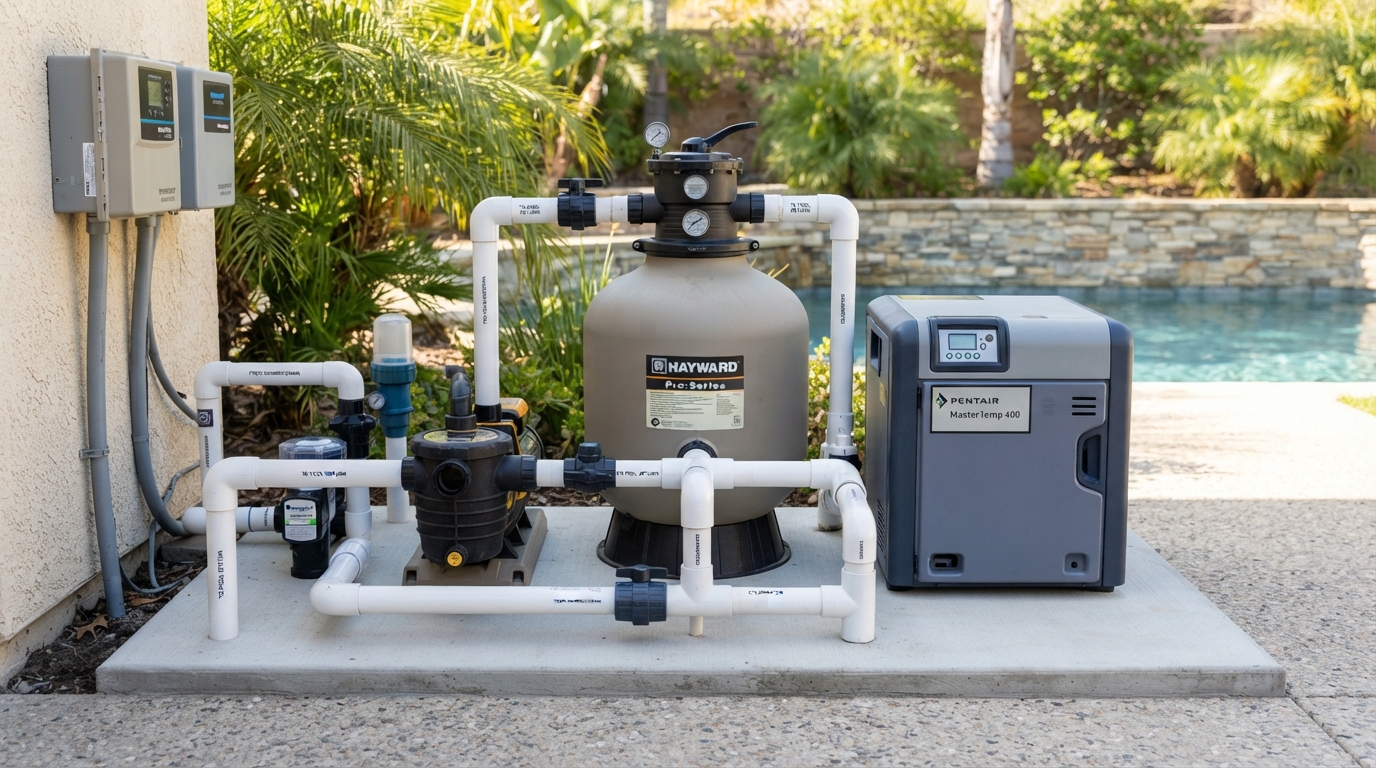
A pool heater is connected to the rest of the pool system. If the pump, filter, valves, plumbing, or water flow are not working properly, the heater may not perform correctly.
A proper inspection may include checking:
- Heater condition
- Pump operation
- Filter pressure
- Water flow
- Valves
- Plumbing
- Pool automation
- Error codes
- Visible leaks
- Equipment pad layout
- Water chemistry
- Filter condition
- Baskets and circulation
This helps avoid replacing the wrong part or spending money on a repair that does not solve the real issue.
Pool Heater Problems in North Texas
Homeowners in North Texas often use pool heaters during cooler mornings, spring, fall, evenings, and special gatherings. In areas like Plano, Frisco, McKinney, Celina, Decatur, Azle, Haslet, Saginaw, Lake Worth, and Fort Worth, pool equipment also deals with heat, dust, storms, pollen, debris, and heavy seasonal use.
These conditions can affect filters, water flow, pumps, chemical balance, heater performance, pool equipment lifespan, and overall maintenance needs. A heater repair issue may actually begin with a dirty filter, weak circulation, or poor water balance.
When to Call for Pool Heater Repair
You should schedule pool heater repair or inspection if:
- The heater is not turning on
- The water is not warming up
- You see error codes
- The heater shuts off quickly
- The heater is leaking
- You hear unusual noises
- You smell gas
- The pump seems weak
- The filter pressure is high
- The heater worked before but suddenly stopped
- You are not sure if the issue is the heater, pump, or filter
If there is any safety concern, especially gas smell, electrical issues, or leaking equipment, stop using the heater and have it inspected.
What Wise Pool Services Can Help With
Wise Pool Services helps homeowners with pool heater repair support, pool equipment checks, pool maintenance, and related pool services.
Our services may include:
- Pool heater inspection
- Pool heater troubleshooting
- Pool heater replacement planning
- Pool equipment repair support
- Pool pump review
- Filter checks
- Filter cleaning
- Water testing
- Chemical balancing
- Pool maintenance
- Pool equipment recommendations
- Weekly pool service
Our goal is to help homeowners understand what is happening with their pool and what needs to be done before moving forward.
Start with a Free In-Home Pool Inspection
If your pool heater is not working, the first step is to inspect the pool and equipment. Wise Pool Services offers a free initial in-home pool inspection for qualifying service areas. During the inspection, we can take a closer look at the pool, heater, filter, pump, water flow, and visible equipment concerns.
After the inspection, we can explain what we found and provide pricing for the recommended repair, treatment, or service before any work begins.
Final Recommendation
If your pool heater is not working, do not assume the heater needs to be replaced immediately. The issue may be caused by a dirty filter, low water flow, pump problem, valve setting, automation issue, electrical concern, gas problem, sensor failure, or internal heater damage.
The best approach is to inspect the entire pool system first. That way, you can understand the real cause and make the right decision. Wise Pool Services helps homeowners across Wise County, Collin County, and Tarrant County with pool heater repair support, pool equipment inspection, weekly pool maintenance, water testing, filter cleaning, and professional pool care.
Frequently Asked Questions
Related Pool Service Resources
Need Help with Your Pool?
Wise Pool Services provides professional pool care across Wise County, Collin County, and Tarrant County.
Weekly pool service starts at $45 per visit. New recurring customers may qualify for free filter cleaning.