
Quick Answer
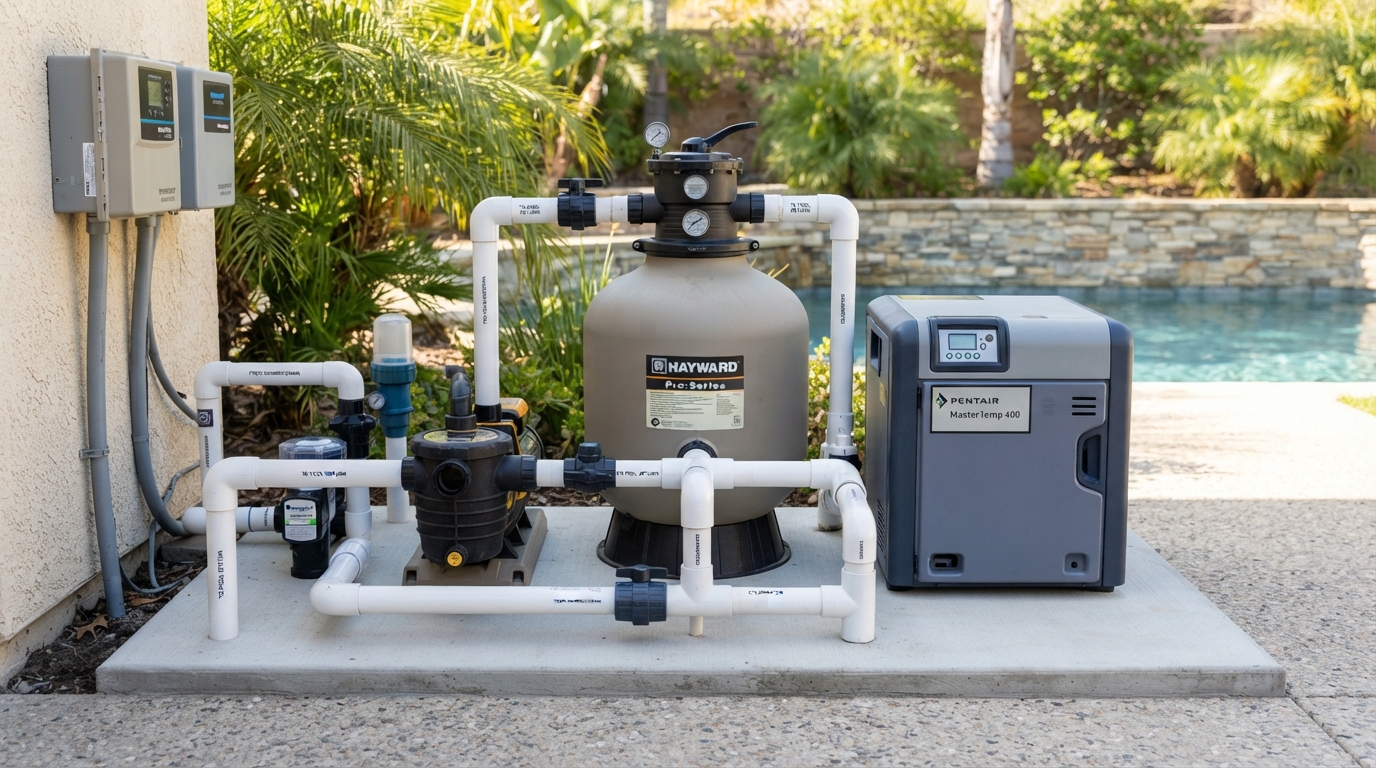
Pool heat pump repair may be needed if your heat pump is not heating, shuts off, runs but does not warm the water, shows an error code, has weak water flow, freezes up, leaks, or makes unusual noises. Common causes include dirty filters, poor circulation, low water flow, thermostat issues, sensor problems, fan issues, refrigerant-related concerns, electrical problems, automation settings, or weather limitations. Wise Pool Services recommends inspecting the heat pump, pool pump, filter, water flow, valves, and equipment setup before quoting repair or replacement.
What Is a Pool Heat Pump?
A pool heat pump is a type of pool heater that uses outside air to help warm pool water. Instead of creating heat directly like a gas pool heater, a heat pump transfers heat from the surrounding air into the pool water.
This makes heat pumps different from gas heaters. A gas heater usually heats water faster and can be useful when homeowners want quick heating for a specific day or spa use. A heat pump usually works more gradually and depends more on air temperature, water flow, and consistent run time.
Because of that, pool heat pump repair and troubleshooting require a slightly different approach. If your pool heat pump is not heating properly, the issue may be with the heat pump itself, but it may also be caused by the filter, pump, water flow, thermostat settings, automation, or outdoor conditions.
Why Pool Heat Pump Problems Should Be Checked Early
A pool heat pump can be a great part of your pool system when it is working correctly. It can help maintain a more comfortable water temperature and extend the time you can enjoy your pool. But when a heat pump starts having problems, the symptoms can be frustrating.
You may notice that:
- The water is not warming up
- The unit runs but does not heat
- The heat pump turns on and off
- The display shows an error code
- The fan is not running
- The unit freezes up
- Water flow seems weak
- The pool takes too long to heat
- The system works sometimes but not consistently
Ignoring these signs can lead to more frustration, higher energy use, poor heating performance, and possible equipment damage. A pool heat pump should be inspected before assuming it needs replacement.
Pool Heat Pump vs Gas Pool Heater
A pool heat pump and a gas pool heater both warm pool water, but they do it differently.
Pool heat pump
A heat pump uses outside air to transfer heat into the water. It usually needs proper airflow, proper water flow, and enough run time to heat efficiently. A heat pump may be affected by outdoor air temperature, humidity, water flow, filter condition, thermostat settings, fan operation, sensor condition, electrical components, and automation setup.
Gas pool heater
A gas heater uses fuel combustion to heat water more directly. It may heat faster, but it can have different repair concerns such as ignition, burner, gas valve, flame sensor, or gas supply problems. A gas heater may be affected by ignition problems, gas supply issues, burner concerns, low water flow, dirty filters, electrical controls, error codes, and ventilation issues.
Understanding the difference matters because a heat pump that heats slowly may not always be broken. Sometimes it may be operating normally, but under poor conditions or incorrect settings.
Common Signs Your Pool Heat Pump Needs Service
Your pool heat pump may need service if you notice any of these problems.
1. The Pool Heat Pump Is Not Heating
This is the most obvious sign. If the system is running but the pool water is not getting warmer, something may be wrong. Possible causes include low water flow, dirty filter, incorrect thermostat setting, outdoor air too cold, heat pump undersized for the pool, sensor issue, fan issue, refrigerant-related problem, compressor issue, or automation setting problem. Before assuming the heat pump is failing, the pool filter, water flow, pump, valves, and settings should be checked.
2. The Heat Pump Runs but the Water Stays Cold
Sometimes the heat pump appears to be working, but the pool temperature does not rise. This can happen when the unit is running but not transferring enough heat into the water. Possible reasons include dirty evaporator coil, poor airflow around the unit, low outdoor air temperature, incorrect temperature setting, low water flow, dirty pool filter, heat loss overnight, no pool cover being used, unit too small for the pool, or internal heat pump issue. A pool heat pump often needs time to warm the water. However, if it runs for a long time without any noticeable improvement, it should be inspected.
3. The Heat Pump Turns On and Off
A heat pump that starts and stops repeatedly may be short cycling. Short cycling may be caused by low water flow, dirty filter, pressure switch issue, sensor problem, thermostat problem, electrical issue, automation setting conflict, refrigerant-related issue, or system protection mode. Short cycling should not be ignored. It may put additional stress on the equipment and prevent the pool from heating properly.
4. The Heat Pump Shows an Error Code
Many heat pumps display error codes when something is wrong. Error codes may point to water flow problem, high pressure or low pressure fault, sensor failure, temperature limit issue, fan problem, compressor issue, defrost mode, electrical problem, or automation communication issue. An error code is useful, but it does not always identify the complete cause. For example, a flow-related error may come from a dirty filter, clogged basket, weak pump, closed valve, or low water level. If you see an error code, take a picture of the display and send it to your pool service company.
5. Water Flow Seems Weak
A pool heat pump needs proper water flow to operate correctly. If water flow is too low, the system may not heat, may shut down, or may show an error code. Low flow can be caused by dirty filter cartridges, high filter pressure, clogged skimmer basket, clogged pump basket, low pool water level, pump losing prime, air in the system, valve position problem, plumbing restriction, or weak pump performance. This is why heat pump inspection should always include the pump, filter, baskets, valves, and circulation system.
6. The Pool Filter Is Dirty
A dirty filter can affect heat pump performance. When the filter is clogged, water flow slows down. If the heat pump does not receive enough water, it may not operate correctly. Signs your filter may be causing heat pump problems include high pressure, weak return flow, cloudy pool water, heater shutting off, flow error code, pool not heating properly, filter cartridges look dirty or worn, and pool has recurring algae. Before replacing heat pump parts, the filter should be checked and cleaned if needed. If the cartridge is damaged, torn, collapsed, or too worn to filter properly, replacement may be recommended.
7. The Fan Is Not Running
A heat pump uses a fan to move air across the system. If the fan is not working, the unit may not be able to transfer heat correctly. Fan-related issues may include fan motor failure, debris blocking the fan, electrical issue, control board problem, capacitor issue, system lockout, or safety mode. If the unit is running but the fan is not moving, schedule an inspection. Do not place hands or tools near fan components while the system is powered.
8. The Heat Pump Is Freezing Up
A pool heat pump may develop ice or frost in certain conditions. Some frost can happen during operation, but heavy ice buildup or repeated freezing can point to a problem. Possible causes include low outdoor temperature, restricted airflow, dirty coil, fan issue, refrigerant-related problem, defrost issue, or sensor issue. A heat pump does not perform the same in every weather condition. In colder weather, heating may slow down or the system may enter defrost mode. If freezing happens often or seems excessive, the unit should be inspected.
9. The Heat Pump Makes Unusual Noises
Unusual noises are another warning sign. Listen for grinding, rattling, buzzing, humming, clicking, screeching, fan noise, vibration, or loud startup sounds. Some noises may be related to the fan, compressor, motor, loose parts, electrical components, or debris inside the unit. A heat pump that makes strange noises should be inspected before the problem gets worse.
10. The Heat Pump Is Leaking
Some water around a heat pump can be normal because heat pumps can produce condensation. However, not every water leak is normal. A technician should inspect the unit if you notice water pooling heavily, plumbing leaks, cracked fittings, water coming from an unusual location, constant leaking even when not running, wet equipment pad, or equipment connections dripping. It is important to determine whether the water is normal condensation or an actual leak.
Why Weather Can Affect Pool Heat Pump Performance
One of the biggest differences between a heat pump and a gas heater is that a heat pump depends heavily on outside air conditions. A heat pump may heat more slowly when air temperature is low, wind is strong, the pool is uncovered, nights are cool, the pool is large, the heat pump is undersized, or the desired temperature is much higher than current water temperature. This does not always mean the heat pump is broken. In North Texas, a heat pump may work well during many parts of the year, but cooler nights and seasonal temperature changes can affect performance.
Why Clean Filters and Good Flow Matter
A pool heat pump needs good water flow. Without proper flow, the system cannot heat efficiently. Good flow depends on clean filter, working pump, proper water level, clean baskets, correct valve position, open plumbing lines, good circulation, and no air leaks. A dirty filter or weak pump can make a heat pump look like it is failing. This is why Wise Pool Services recommends inspecting the full pool system before quoting heat pump repair.
Heat Pump Pool Heater Repair vs Replacement
Not every heat pump issue requires replacement.
Repair may make sense when:
- The unit is not too old
- The problem is minor
- Water flow is the real issue
- The filter needs cleaning
- A sensor or setting is causing the problem
- The fan issue is repairable
- Parts are available
- The unit is otherwise in good condition
Replacement may make sense when:
- The heat pump is old
- Repairs are frequent
- Major internal parts have failed
- The unit is undersized for the pool
- Repair costs are too high
- The system is inefficient
- Parts are difficult to find
- Performance is no longer reliable
A professional inspection can help determine whether pool heat pump repair or replacement is the better decision.
What Wise Pool Services Checks During a Heat Pump Inspection
A proper inspection should look beyond the heat pump alone. Wise Pool Services may check heat pump condition, display and error codes, water flow, pool pump operation, filter pressure, filter condition, skimmer baskets, pump basket, water level, valves, plumbing connections, automation settings, thermostat setting, visible leaks, equipment pad condition, water clarity, and basic equipment concerns. After the inspection, we can explain what we found and provide pricing before moving forward.
Pool Heat Pump Problems in North Texas
Pool equipment in North Texas works hard throughout the year. Pools across Wise County, Collin County, and Tarrant County deal with heat, storms, dust, pollen, leaves, wind, and seasonal temperature changes. These conditions can affect filter performance, pump circulation, water flow, water chemistry, heater performance, equipment lifespan, and pool clarity. During warm months, dirty filters and heavy pool use can create flow issues. During cooler months, lower air temperatures can affect how quickly a heat pump warms the water. A professional inspection helps separate normal heat pump limitations from actual repair problems.
When to Schedule Pool Heat Pump Repair
You should schedule heat pump service if the heat pump is not heating, the unit turns on and off, the display shows an error code, the fan is not running, the unit freezes up, water flow is weak, the pool takes too long to heat, the unit makes unusual noises, you see signs of leaking, the heat pump works inconsistently, the system does not reach the set temperature, or you are not sure if the issue is the heater, pump, filter, or settings. Do not guess. Let a technician inspect the heat pump, pump, filter, water flow, and equipment setup first.
Start with a Free In-Home Pool Inspection
Wise Pool Services offers a free initial in-home pool inspection for qualifying service areas. This first visit gives us a chance to inspect the heat pump, pump, filter, water flow, valves, and visible equipment concerns. There is no cost for the initial inspection visit. After the inspection, we can provide a clear recommendation and pricing for any repair, replacement, treatment, or service needed before moving forward.
How Wise Pool Services Can Help
Wise Pool Services helps homeowners with pool heat pump repair support, heat pump inspections, water flow problems, filter checks, pool equipment concerns, and weekly pool maintenance. Our services may include pool heat pump inspection, pool heater troubleshooting, heat pump pool heater repair support, pool equipment inspection, pump and flow checks, filter checks, pool filter cleaning, water testing, chemical balancing, pool maintenance, and equipment replacement recommendations. We serve homeowners across Wise County, Collin County, Tarrant County, and nearby North Texas communities.
Final Recommendation
If your pool heat pump is not heating, do not assume the unit needs replacement right away. Heat pump problems can come from dirty filters, low water flow, pump issues, incorrect settings, sensor problems, airflow issues, automation problems, weather limitations, or internal equipment concerns. The best first step is a full inspection of the heat pump, pump, filter, water flow, valves, and equipment setup. Wise Pool Services can inspect the system and explain what is needed before any repair or replacement work begins.
Need Pool Heat Pump Repair?
Wise Pool Services can inspect your pool heat pump, pump, filter, water flow, and equipment setup to help identify what may be causing the issue. Free initial in-home pool inspection available for qualifying service areas.
Frequently Asked Questions
Related Pool Service Resources
Need Help with Your Pool?
Wise Pool Services provides professional pool care across Wise County, Collin County, and Tarrant County.
Weekly pool service starts at $45 per visit. New recurring customers may qualify for free filter cleaning.