Quick Answer
If you are searching for pool heater repair near me, start by checking whether your pool has proper water flow, clean filters, enough water in the pool, open valves, working pump circulation, correct heater settings, and visible error codes. Many pool heater problems are caused by dirty filters, low flow, pump issues, automation settings, or equipment problems outside the heater itself. Wise Pool Services helps homeowners across Wise County, Collin County, and Tarrant County with pool heater inspection, troubleshooting, equipment checks, and pool maintenance.
Why Pool Heater Problems Should Not Be Ignored
A pool heater can make your pool more enjoyable during cooler mornings, evenings, spring, fall, and special gatherings. When it stops working, most homeowners want a fast answer.
The challenge is that a pool heater is connected to the rest of the pool system. The issue may not be only the heater. A dirty filter, weak pump, closed valve, low water level, or poor circulation can stop the heater from working properly.
Before replacing expensive equipment, it is important to understand what may be causing the problem. If you are looking for pool heater repair near me, this guide will help you know what to check first and when to call a professional.
1. Check If the Pool Pump Is Running
Your pool heater depends on water moving through the system. If the pump is not running, the heater usually cannot operate properly.
Check whether:
- The pump is turned on
- The pump basket is full of water
- The pump is making unusual noise
- The return jets have water flow
- The pump is losing prime
- There are air bubbles in the system
- The pump timer or automation is set correctly
If the pump is not circulating water, your heater may shut down, refuse to start, or show an error code. A pool heater needs the right flow to operate safely. That is why a pool heater inspection should always include the pump and circulation system.
2. Check the Pool Filter
A dirty pool filter is one of the most common reasons a pool heater does not work correctly. When the filter is clogged, water flow can slow down. If the heater does not receive enough water flow, it may turn off or fail to start.
Signs your filter may be part of the problem include:
- High filter pressure
- Weak return flow
- Cloudy water
- Heater turning on and off
- Heater showing a flow-related error
- Pool not clearing even after cleaning or chemicals
- Filter cartridges that look dirty, worn, or collapsed
If the filter is dirty, cleaning it may help restore better water flow. If the filter cartridge is damaged or worn out, replacement may be needed. Before assuming the heater is bad, have the filter checked.
3. Check the Pool Water Level
Low pool water level can affect circulation. If the water level is too low, the skimmer may pull air into the system, which can reduce pump performance and affect heater operation.
Look at the water level near the skimmer opening. In many pools, the water should sit around the middle of the skimmer opening.
Low water level can cause:
- Air bubbles
- Pump losing prime
- Weak circulation
- Heater shutdown
- Poor filtration
- Equipment strain
If the pump is not moving water properly, the heater may not run correctly.
4. Check the Valves
Pool valves control where water flows. If a valve is closed or positioned incorrectly, the heater may not receive proper flow.
A valve issue may cause:
- Low flow through the heater
- Heater error codes
- Poor return pressure
- Spa not heating
- Pool not heating
- Equipment not circulating correctly
If your pool has a spa, water feature, bypass valve, automation system, or multiple return lines, valve position matters even more. Do not force valves if you are not sure how they work. A pool technician can check the valve setup during an inspection.
5. Look for Heater Error Codes
Many pool heaters show error codes when something is wrong. These codes can help identify the general issue.
A heater error code may point to:
- Low water flow
- Pressure switch issue
- Ignition problem
- Flame sensor issue
- Temperature sensor issue
- High limit switch
- Control board problem
- Automation communication issue
However, an error code does not always mean the heater itself is the problem. For example, a low-flow error may be caused by a dirty filter, clogged basket, closed valve, weak pump, or low water level. If your heater is showing an error code, take a photo of the code and send it to your pool service company before the inspection. That can help the technician understand the issue faster.
6. Check the Heater Settings
Sometimes the heater is not broken. It may simply be set incorrectly.
Check:
- Temperature setting
- Pool mode vs spa mode
- Heater mode
- Automation schedule
- App settings
- Timer settings
- Thermostat setting
- Whether the heater is enabled
If your pool has automation, the heater may be controlled by an app or panel. If the automation is not sending the right command, the heater may not respond. This is common when homeowners switch between pool mode and spa mode or when a schedule has been changed.
7. Check for Visible Leaks
Pool heaters, pumps, filters, plumbing, valves, and equipment pads can develop leaks.
Look for water around:
- Heater base
- Pump
- Filter
- PVC plumbing
- Valves
- Unions
- Equipment connections
- Heater plumbing connections
A small leak can sometimes point to a bigger issue, especially if it affects water pressure, equipment operation, or heater performance. Do not ignore visible leaks near a heater. Leaks can worsen and may lead to equipment damage.
8. Listen for Unusual Sounds
A pool heater may need service if it makes strange noises.
Pay attention to:
- Clicking
- Rattling
- Banging
- Humming
- Grinding
- Delayed ignition sounds
- Repeated startup attempts
- Loud burner operation
Some noises may be related to ignition, gas flow, internal components, water flow, or equipment vibration. If the heater makes unusual sounds and does not heat properly, schedule an inspection before continuing to use it.
9. Be Careful with Gas Heater Issues
If you have a gas pool heater, safety matters.
Stop using the heater and call the proper professional if you notice:
- Gas smell
- Strong burning smell
- Delayed ignition
- Soot
- Flames where they should not be
- Heater shutting down repeatedly
- Visible damage around the heater
- Unusual burner behavior
Gas-related issues should be handled carefully. In some cases, work may require a licensed gas professional or specialized technician. Wise Pool Services can help inspect the pool equipment system and determine the best next step.
10. Check If the Pool Heater Is Old or Frequently Failing
Sometimes the question is not whether a heater can be repaired. The question is whether repair is still the best decision.
A heater may be ready for replacement if:
- It is very old
- It keeps breaking down
- Repair costs are getting high
- Parts are hard to find
- It is leaking internally
- It heats slowly
- It is unreliable
- The heat exchanger is damaged
- It no longer fits your pool needs
- It has repeated error codes
A professional inspection can help you decide whether repair or replacement makes more sense.
Why North Texas Pool Heaters Need Proper Maintenance
Pool equipment in North Texas works hard. Pools in Wise County, Collin County, and Tarrant County deal with heat, storms, pollen, dust, leaves, heavy sun, and seasonal use.
These conditions can affect pool filters, water flow, pump performance, heater efficiency, chemical balance, circulation, and equipment lifespan. A heater problem may start with another issue, such as a dirty filter or weak pump. That is why full equipment inspection is important before giving a repair price.
What a Pool Heater Inspection Should Include
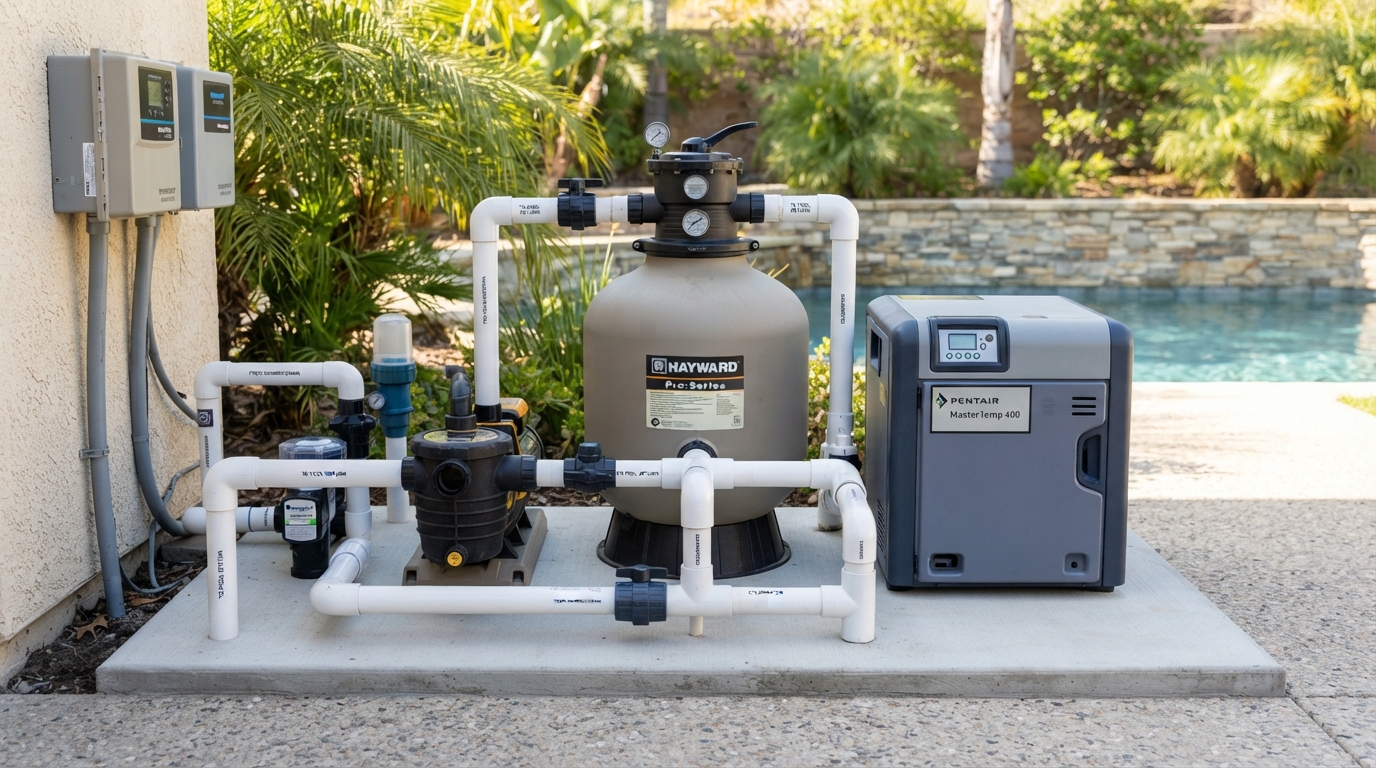
A proper pool heater inspection should not only look at the heater. It should review the full system that allows the heater to work.
Wise Pool Services may check:
- Heater condition
- Error codes
- Pump operation
- Filter pressure
- Water flow
- Skimmer and pump baskets
- Water level
- Valves
- Plumbing
- Visible leaks
- Automation settings
- Equipment pad condition
- Water clarity
- Filter condition
- Basic equipment concerns
This helps identify whether the issue is the heater or another part of the pool system.
Pool Heater Repair Near Me: When to Call a Professional
You should schedule pool heater service if:
- The heater is not turning on
- The heater turns on and shuts off
- The pool water is not warming up
- You see error codes
- The heater is leaking
- The pump seems weak
- The filter pressure is high
- The heater makes unusual noises
- You smell gas
- The heater worked before but suddenly stopped
- You are not sure what is causing the problem
If there is any gas smell, electrical concern, or safety issue, stop using the heater and get help right away.
How Wise Pool Services Can Help
Wise Pool Services helps homeowners with pool heater repair support, pool heater inspection, equipment checks, pool maintenance, and related pool services. Our team helps inspect the system, identify possible causes, and explain the next step before moving forward.
We help with:
- Pool heater troubleshooting
- Pool heater inspection
- Pool equipment repair support
- Pool pump review
- Filter checks
- Filter cleaning
- Water testing
- Chemical balancing
- Weekly pool maintenance
- Pool equipment recommendations
We serve homeowners across Wise County, Collin County, Tarrant County, and surrounding North Texas areas.
Start with a Free In-Home Pool Inspection
If your pool heater is not working, the best first step is to inspect the pool and equipment. Wise Pool Services offers a free initial in-home pool inspection for qualifying service areas. There is no cost for the first inspection visit.
After the inspection, we can explain what we found and provide pricing for any recommended repair, treatment, or service before moving forward. This helps you understand the issue clearly before making a decision.
Final Recommendation
If you are searching for pool heater repair near me, do not assume the heater needs to be replaced right away. Start by checking the pump, filter, water level, valves, error codes, heater settings, automation, and visible equipment issues. Many heater problems are connected to water flow or equipment performance.
A professional inspection can help identify the actual cause and prevent unnecessary repairs. Wise Pool Services helps North Texas homeowners with pool heater inspection, pool equipment review, filter checks, pool maintenance, and professional pool care.
Frequently Asked Questions
Related Pool Service Resources
Need Help with Your Pool?
Wise Pool Services provides professional pool care across Wise County, Collin County, and Tarrant County.
Weekly pool service starts at $45 per visit. New recurring customers may qualify for free filter cleaning.