Quick Answer
A pool pump losing prime means the pump is not staying full of water while it runs. This can happen because of low water level, air leaks, a loose pump lid, damaged O-ring, clogged baskets, valve issues, plumbing problems, or pump damage. If the pump runs dry, it can overheat and damage the motor, seals, or internal parts. Wise Pool Services can inspect the pump, filter, plumbing, valves, baskets, water level, and visible equipment concerns before quoting any repair.
Seeing Air in Your Pump Basket? This Is What It Can Mean
If you see air in the pump basket or notice that your pool pump is not staying full of water, your pump may be losing prime. This is a common pool issue, but it should not be ignored. Your pool pump needs water to operate correctly. When the pump loses prime, it may struggle to move water through the filter, heater, plumbing, and return lines. Over time, this can lead to weak circulation, cloudy water, green water, equipment strain, and possible pump damage.
The most important thing to remember is this: Don't let a pump run dry. Schedule an inspection.
What Does It Mean When a Pool Pump Loses Prime?
A pool pump is "primed" when the pump housing and suction line are full of water and the pump can move water properly through the system. When the pump loses prime, it means air has entered the system or the pump is not getting enough water to keep running correctly.
You may notice air inside the pump basket, the pump basket not filling with water, water flow starting and stopping, air bubbles coming from return jets, weak suction, weak return flow, the pump running louder than normal, the pump struggling to restart, the pump running dry, or pool circulation becoming inconsistent. A pump that keeps losing prime should be inspected quickly because it can lead to bigger equipment problems.
Why a Pool Pump Losing Prime Matters
A pool pump that loses prime can affect the entire pool system. When the pump cannot move water properly, your pool may have poor circulation, poor filtration, cloudy water, green water, algae growth, weak skimming, dirty pool surfaces, heater issues, salt system flow warnings, chemical imbalance, and equipment strain. Your pump is the heart of the pool system. If it cannot stay primed, the pool cannot circulate and filter water the way it should.
Can a Pool Pump Run Dry?
Yes. If a pool pump loses prime and continues running without enough water, it can run dry. This can cause serious damage. Running a pump dry may lead to overheating, damaged pump seals, motor damage, internal part damage, warped components, pump failure, and more expensive repairs. If you notice the pump is running without water in the basket, turn it off and schedule an inspection.
Common Causes of a Pool Pump Losing Prime
A pool pump can lose prime for several reasons. Some causes are simple. Others may require repair or professional troubleshooting. Here are the most common causes.
1. Low Pool Water Level
Low water level is one of the most common reasons a pool pump loses prime. If the water level drops too low, the skimmer can start pulling air into the system instead of water. This may cause air in the pump basket, air bubbles from return jets, weak suction, the pump basket not filling, and the pump losing prime. The pool water level should usually be around the middle of the skimmer opening. If it is too low, add water before running the pump again.
2. Loose Pump Lid
The pump lid needs to seal tightly. If the pump lid is loose, cracked, dirty, or not seated correctly, air can enter the system and cause the pump to lose prime. Signs may include air inside the pump basket, the pump basket not filling fully, bubbles in the pool returns, the pump losing suction, and the pump restarting poorly. Sometimes the lid simply needs to be cleaned and secured correctly. Other times, the lid or O-ring may need replacement.
3. Damaged Pump Lid O-Ring
The O-ring helps create a tight seal between the pump lid and the pump housing. If the O-ring is dry, cracked, stretched, dirty, or damaged, air can enter the pump. A bad O-ring can cause the pump to lose prime, air in the pump basket, weak flow, bubbles in the return jets, and difficulty restarting the pump. This is a common issue and should be checked during an inspection.
4. Clogged Skimmer Basket
A clogged skimmer basket can restrict water flow into the pump. If the basket is full of leaves, debris, bugs, or other material, the pump may struggle to pull enough water. This can lead to weak suction, poor skimming, the pump losing prime, air entering the system, and reduced circulation. Skimmer baskets should be emptied regularly, especially during windy days, storms, or heavy leaf seasons.
5. Clogged Pump Basket
The pump basket catches debris before it reaches the pump impeller and equipment. If the pump basket is clogged, water flow can be restricted. Signs of a clogged pump basket include the pump not filling properly, weak water flow, pump noise, poor circulation, and the pump losing prime. The pump basket should be checked and cleaned regularly when accessible.
6. Air Leak on the Suction Side
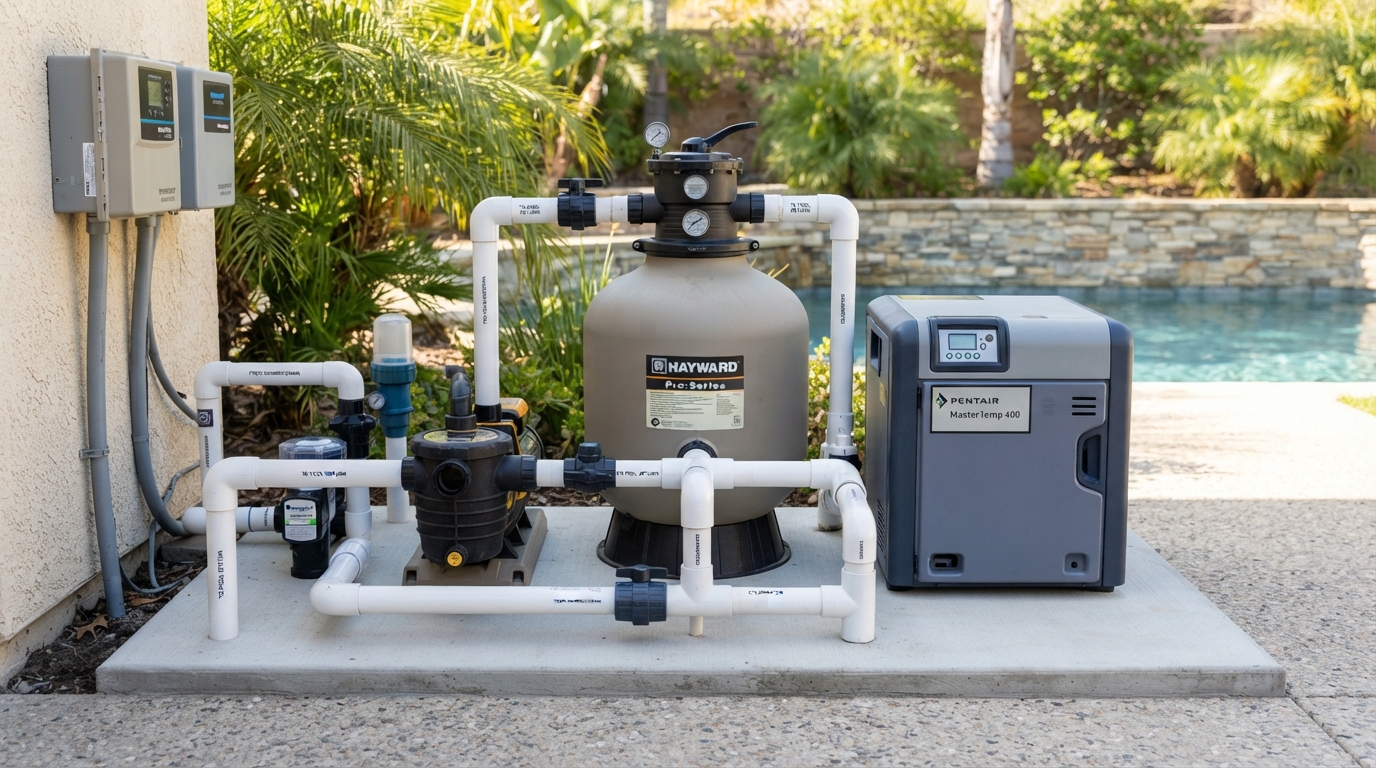
An air leak on the suction side of the system can cause the pump to lose prime. The suction side includes the plumbing and components that bring water from the pool into the pump. Possible air leak points include the pump lid, pump lid O-ring, suction plumbing, valves, unions, fittings, cracked pipes, and skimmer line connections. Air leaks can be harder to find because they may not always leak water visibly. Instead, they pull air into the system while the pump is running.
7. Valve Issues
Valves control where water moves in the pool system. If a valve is closed, partially closed, damaged, leaking, or positioned incorrectly, the pump may not receive enough water. Valve issues can cause low flow, weak suction, the pump losing prime, air in the system, and pool or spa circulation problems. A technician can inspect the visible valves and confirm whether water is moving correctly through the system.
8. Plumbing Problems
Pool plumbing problems can also cause prime issues. Possible plumbing concerns include cracked PVC, loose fittings, suction line leaks, underground leaks, restricted plumbing, damaged unions, and poor equipment pad connections. Some plumbing problems are visible at the equipment pad. Others may require more advanced troubleshooting. If the pump keeps losing prime even after checking the water level, lid, O-ring, and baskets, plumbing should be inspected.
9. Dirty Filter or High Filter Pressure
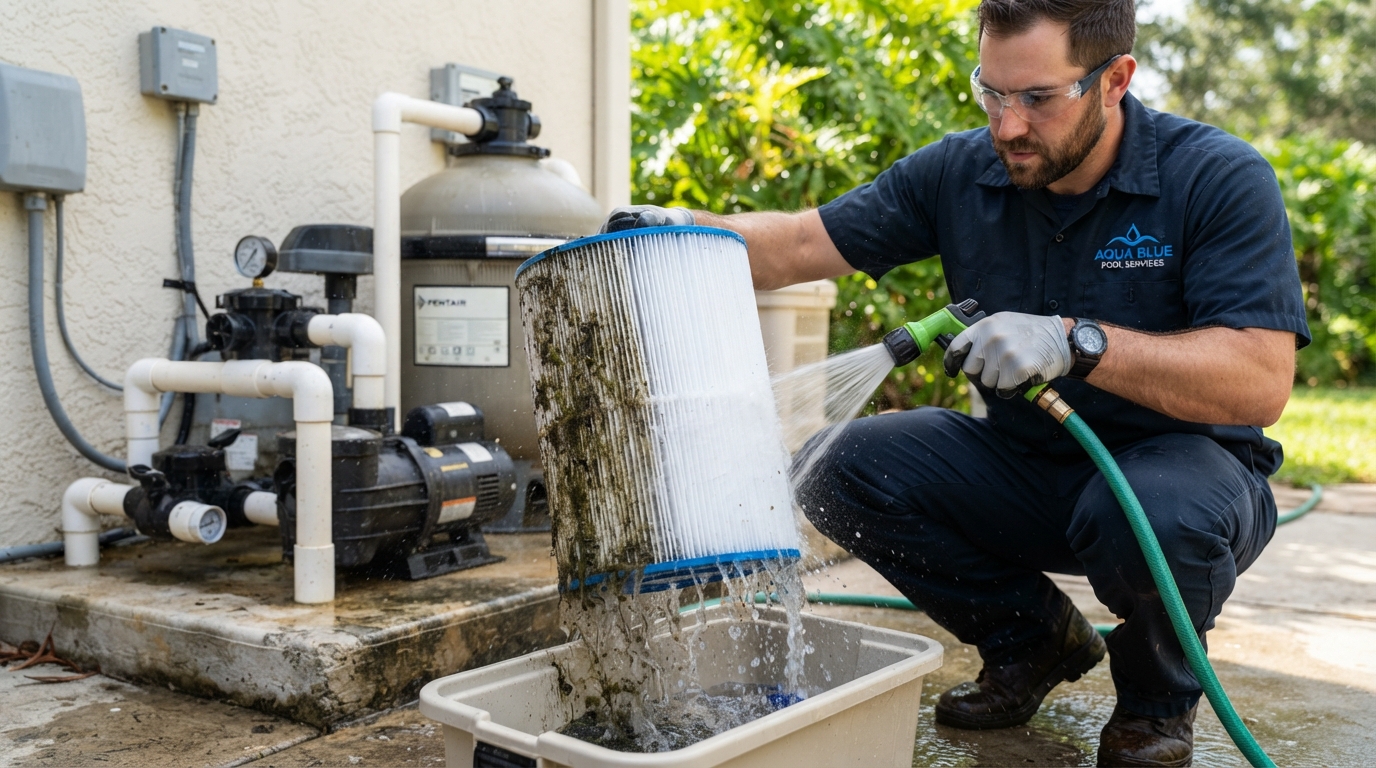
A dirty filter usually affects the pressure side of the system, but it can still contribute to poor circulation and pump strain. If the filter is clogged, the system may have high pressure, weak return flow, cloudy water, poor circulation, heater low-flow issues, and equipment strain. If the pool also has suction issues or air leaks, a dirty filter can make the system perform even worse. Filter pressure and filter condition should be checked during a pool pump inspection.
10. Pump Damage or Wear
Sometimes the pump itself may be worn or damaged. Pump problems may include bad seals, motor problems, a damaged impeller, cracked housing, worn parts, overheating, internal wear, and the pump not pulling water properly. If the pump is old, noisy, leaking, overheating, or constantly losing prime, it may need repair or replacement.
Air in Pool Pump Basket: Is It Normal?
A small amount of air during startup may happen sometimes. But if the pump basket never fills with water, keeps showing air, or loses water while running, that is not normal. You should schedule an inspection if you notice constant air in the pump basket, the pump basket only half full, the water level dropping inside the pump basket, large air bubbles from return jets, the pump repeatedly losing prime, or the pump running dry. Air in the pump basket usually means the system is pulling air from somewhere or not getting enough water.
How a Pump Losing Prime Affects Water Clarity
When a pump loses prime, water does not circulate properly. That means the filter cannot clean the water correctly, and chemicals may not distribute evenly throughout the pool. This can lead to cloudy water, green water, algae growth, debris buildup, poor skimming, dirty pool surfaces, unbalanced water, and recurring water problems. If your pool keeps getting cloudy or green, the issue may not be just chemicals. The pump, filter, plumbing, and water flow should be checked.
Pump Losing Prime and Heater Problems
Many pool heaters need proper water flow to operate safely. If the pump loses prime or the water flow is too low, the heater may not turn on, turn on and shut off, show an error code, show a low-flow warning, fail to heat the water, or stop working consistently. Before assuming the heater is bad, the pump, filter, water flow, and plumbing should be inspected.
Pump Losing Prime and Salt System Problems
Salt systems also depend on proper water flow. If the pump is not staying primed, the salt system may show a flow warning, low chlorine production, error lights, cloudy water, green water, and inconsistent sanitizer levels. The salt cell may not be the only issue. Low flow, air in the system, dirty filters, or pump prime problems can also affect salt system performance.
What to Do If Your Pool Pump Is Losing Prime
If your pump is losing prime, you can start with a few basic checks. First, check the water level and make sure the water is around the middle of the skimmer opening. Second, check the skimmer basket and remove leaves and debris. Third, check the pump basket and make sure it is not clogged with debris. Fourth, check the pump lid and make sure the lid is tight and seated correctly. Fifth, look for visible leaks around the pump, valves, plumbing, and equipment pad. Finally, do not let the pump run dry. If the pump is running without enough water, turn it off and schedule service. If the issue continues after basic checks, it is time for an inspection.
Why You Should Not Guess
A pool pump losing prime can have several possible causes. It may be low water level, a pump lid issue, an O-ring issue, a clogged basket, an air leak, a valve issue, a plumbing issue, a dirty filter, or pump damage. Replacing the pump without checking the full system may not solve the real problem. That is why Wise Pool Services inspects first. We check the pump, baskets, filter, valves, plumbing, water level, water flow, and visible equipment concerns before quoting repair work.
Repair or Replacement?
A pump that loses prime does not always need to be replaced. Repair may be possible when the issue is a lid or O-ring, the basket is clogged, a fitting needs attention, a valve needs adjustment, the pump seal is the issue, the plumbing concern is minor, or the pump is still in good condition. Replacement may be needed when the pump is very old, the motor has failed, the pump housing is cracked, the pump keeps overheating, repairs are too expensive, parts are unavailable, the pump repeatedly fails, or the pump is not right for the system. The best way to know is to schedule an inspection.
What Wise Pool Services Can Inspect
During a pool pump inspection, Wise Pool Services may check pump operation, the pump basket, pump lid, pump lid O-ring, water level, skimmer baskets, filter pressure, filter condition, water flow, return jets, air bubbles, valves, visible plumbing, visible leaks, equipment pad condition, heater operation if applicable, salt system status if applicable, and automation settings if applicable. After the inspection, we can explain what we found and provide pricing before moving forward.
Pool Pump Losing Prime in North Texas
Wise Pool Services helps homeowners across Wise County, Collin County, Tarrant County, and surrounding North Texas areas with pool pump issues, circulation problems, filter checks, plumbing concerns, equipment inspections, and ongoing pool maintenance. Service areas may include Decatur, Rhome, Boyd, Newark, Paradise, Bridgeport, Azle, Haslet, Saginaw, Lake Worth, Fort Worth, Frisco, McKinney, Prosper, Plano, Celina, and nearby North Texas communities. If your pump is losing prime, showing air, or not staying full of water, Wise Pool Services can help start with an inspection.
Final Recommendation
A pool pump losing prime is more than a small inconvenience. It can affect circulation, filtration, water clarity, heater performance, salt system performance, and the life of the pump. If your pump is pulling air, running dry, losing water in the basket, or not staying primed, do not wait. Schedule an inspection before the issue causes bigger damage.
Frequently Asked Questions
Related Pool Service Resources
Need Help with Your Pool?
Wise Pool Services provides professional pool care across Wise County, Collin County, and Tarrant County.
Weekly pool service starts at $45 per visit. New recurring customers may qualify for free filter cleaning.